

Introduction
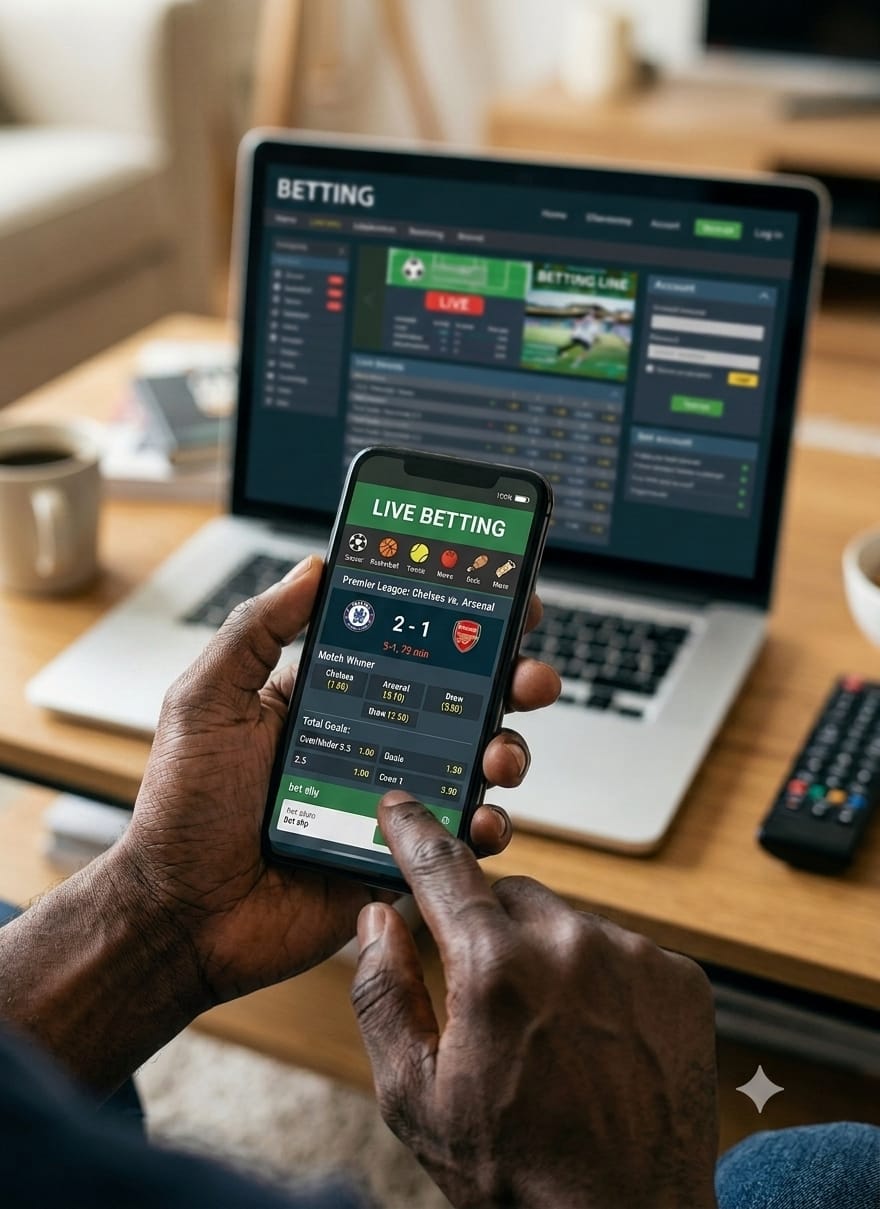
Ghana’s gaming and gambling industry has experienced remarkable growth over the last decade. Once dominated by traditional casinos and betting centres, the sector has evolved into a technology-driven market powered by online platforms, mobile applications, and digital payment systems. Sports betting has become one of the most visible and commercially successful segments of the gaming industry, with major operators like Betway, SportyBet, SuperBet, and 1xBet attracting thousands of participants nationwide.
In a legal context, “gaming” refers to playing a game of chance to win a luck-based reward. Typical examples include:
- Poker, roulette, and baccarat
- Bingo and slot machines
- Horse-race and sports betting
Note: For this legal analysis, “gaming” does not refer to video games, e-sports, recreational gaming, or the national lottery.
As gambling integrates into Ghana’s digital economy, regulatory compliance, legal licensing, underage gambling prevention, and gambling addiction controls have become crucial. This article examines the legal framework governing games of chance in Ghana, operator licensing rules, ongoing compliance obligations, and key regulatory challenges.
What is Gaming in Ghana and who regulates it?
Gaming activities in Ghana are primarily governed by the Gaming Act, 2006 (Act 721). Enacted to modernize laws on casinos and games of chance, Act 721 excludes lotteries, which are regulated separately under the National Lotto Act, 2006 (Act 722).
Legal Definitions under Act 721
- Game of Chance (Section 72): A game (other than lotto) where participants pay money for the opportunity to win a reward based on luck.
- Betting: An arrangement to risk money or valuable property on an event with an uncertain outcome.
Forms of Gaming in Ghana
- Sports Betting: Betting on local and international sporting events through physical betting centres or online platforms, including websites and mobile applications.
- Casinos: Physical gaming establishments and online platforms offering traditional casino games such as poker, roulette, blackjack, bingo, and slot machines.
- Route Operators: Installing and operating gaming machines in multiple premises such as hotels, bars, restaurants, and entertainment venues.
- Promotional Gaming: Contests and games run by businesses for marketing campaigns. This includes promotional competitions, raffles, and promotional draws for prizes.
The Gaming Commission of Ghana is the principal legal regulator responsible for supervising, monitoring, and controlling games of chance. The Commission is responsible for issuing licences, inspecting gaming premises, investigating breaches of gaming laws, and enforcing compliance. It also performs such additional functions as may be assigned by the Minister for the Interior under the Gaming Act.
How to Obtain a Gaming Licence in Ghana
Under Section 13 of Act 721, no entity can lawfully operate a game of chance in Ghana without a valid licence issued by the Gaming Commission. Operating without a licence is a criminal offence punishable by a fine or imprisonment under Sections 62 and 63.
Types of Gaming Licences
- Casino Licences
- Sports Betting Licences
- Interactive / Mobile Gaming Licences
- Route Operator Licences
- Promotional Gaming Licences
Statutory and Capital Requirements (2025 Guidelines)
To qualify for a gaming licence, an applicant must be incorporated as a limited liability company in Ghana and meet the following criteria:
- Maintain an identifiable physical office.
- Register a service mark or logo with the Registrar of Companies.
- Provide tax clearance and criminal clearance certificates for the applicant’s directors.
- Allow the Commission access to financial records.
- Pass a “Fit and Proper” test.
- Complete AML/CFT & P (Anti-Money Laundering / Combating the Financing of Terrorism & Proliferation) forms.
Minimum Stated Capital Requirements:
- Casinos: US$2.5 million
- Sports Betting Operators: US$2.0 million
- Route Operators: US$1.5 million
Licence Application Fees
The Application fees vary by licence type, ranging from US$30,000 for Route Operations up to US$300,000 for an Online Sports Betting Licence (partly Ghanaian-owned). However, the annual license renewal fees generally equal 50% of the initial licensing cost.
Legal Obligations of Licensed Gaming Operators
Acquiring a licence is only the first step. Licensed operators must adhere to strict ongoing legal obligations:
- Maintain Capital & Bankroll: Operators must continuously maintain minimum capital and bankroll levels to cover player winnings (Sections 23–24, Act 721).
- Prompt Payment of Winnings: Issuing dishonoured cheques to winners is prohibited. Unpaid winners must be paid via cash or banker’s draft, and the incident must be reported to the Commission. Failure to do so will cause the Commission to impose sanctions on the gaming operator (Section 25, Act 721).
- AML & KYC Compliance: Under the Anti-Money Laundering Act, 2020 (Act 1044), operators must verify that their capital is derived from lawful sources. They must perform Know Your Customer (KYC) and Customer Due Diligence (CDD) checks on customer transaction records, including mobile money and digital payments.
- Data Protection: Operators must register with the Data Protection Commission under the Data Protection Act, 2012 (Act 843) to lawfully collect, store, and process user data.
- Responsible Gambling & Age Restrictions: Minors (under age 18) are strictly prohibited from participating in gaming. Advertisements must comply with the Commission’s Guidelines on Advertising.
Case Spotlight: GAFAT Consult Ltd v. Mobile Sport Ltd (MSPORT)
The consequences of regulatory non-compliance were illustrated in GAFAT Consult Ltd v. MSPORT & Benjamin Boateng (SUIT NO: GJ/0128/2023). The High Court ordered MSPORT to pay GH¢364,847 after GAFAT’s employee, Benjamin Boateng, used corporate funds via a mobile money merchant account for personal betting on the MSPORT platform. The court found that MSPORT failed to exercise adequate due diligence in verifying the identity of the 2nd Defendant before allowing him to bet GH¢400,000 of his employer’s funds on the platform in his personal capacity. It was held that MSPORT failed to observe the Gaming Commission’s regulatory guidelines. The decision serves as a reminder that operators must exercise adequate oversight over account registration and transaction monitoring processes.
Prohibited Conduct and Penalties under Act 721
The Gaming Act prohibits several practices to protect public interest and the integrity of the gaming industry.
- Unlicensed Operations: Running an unlicensed gaming business is a direct criminal offence.
- Unapproved Advertisements: All ads must be vetted by the Gaming Commission to prevent targeting minors, misleading the public or promoting irresponsible gambling.
- Underage Gambling: Permitting persons under the age of 18 to gamble or operate machines is a crime under Sections 48 and 56. Minors found gambling or contravening the Act face juvenile court sanctions.
- Cheating & Fraud: Using tricks, false pretences, or fraudulent methods to win carries criminal penalties under Section 37. Also, under Section 33, it is unlawful to conduct gaming activities in a manner that gives any participant an unfair advantage over others.
- Unlawful & Defective Machines: Importing, selling, or running defective or unlicensed slot machines without Commission approval is prohibited (Sections 55–56).
- Unapproved Public Gaming: Conducting gaming activities in public without the Commission’s approval is a criminal offence underSection 34. In public, even simple “table-top” games of chance involving cards, coins, or tokens require the Commission’s approval.
Conclusion
Ghana’s legal framework, anchored by the Gaming Act, 2006 (Act 721) and enforced by the Gaming Commission, balances industry growth with public protection. As online and cross-border gaming continue to expand, operators and investors must prioritise regulatory compliance, robust KYC procedures, and strict adherence to licensing requirements to succeed in Ghana’s evolving market.
By: Marie-Ann R. H. Adae
